
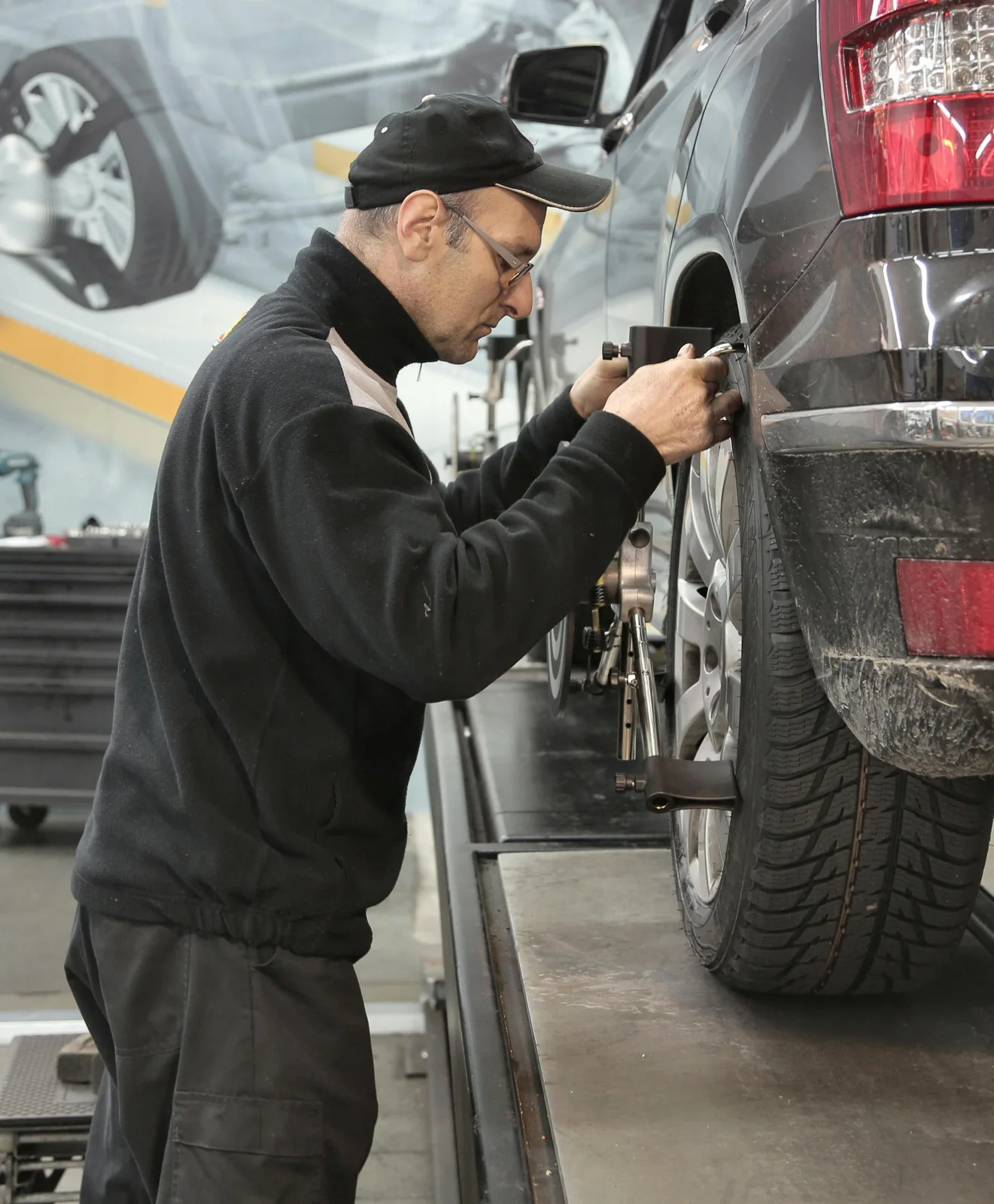
Notice changes in the steering
A steering wheel that sits off-centre on a level road, a vehicle that repeatedly drifts to one side, or a new tendency to wander can justify an alignment check. Road camber, tyre pressures and braking can also affect how a vehicle feels.
Read the tyre wear pattern
Feathering across the tread, rapid wear on one edge or noticeably different wear from one tyre to another can point to an alignment issue. It can also relate to tyre pressure, worn suspension components or driving conditions.
Think back to impacts and repairs
Potholes, kerb strikes and suspension or steering work can alter alignment angles or reveal a component problem. A visible bent wheel or damaged tyre needs attention before routine alignment work.
Ask for measured results
Before-and-after readings make the result easier to understand. If worn or damaged steering and suspension parts affect the work, they should be explained before you decide on the next step.
Further reading
When in doubt, arrange an inspection
These notes are general vehicle-care guidance. If a fault affects safe driving, a tyre is visibly damaged, braking feels abnormal or the vehicle is behaving unexpectedly, do not rely on this guide alone—contact a workshop or seek appropriate assistance.